Arriving in Thailand · Guide
Thailand Arrival Checklist: TDAC, Visa Rules, SIM, Money and Your First Ride (2026)
Thailand changed its visa-free stay on 15 September 2026, and most guides online still quote the old rule. The first 72 hours in Thailand are the only part of the trip where a small mistake costs real money or real time — a missed arrival form, a wrong assumption about how long you can stay, no data on landing, or a taxi that never turns the meter on. This checklist covers the eight things to sort before you land, in the order you will actually need them.
Published Updated
Entry rules and prices change. This guide shows its last check date in the fact-check box below — re-check the visa section before you fly.
Fact check
- Checked on
Sources
- Thailand Digital Arrival Card — Immigration Bureau
- Thai e-Visa portal — Ministry of Foreign Affairs
- Tourist Police — Royal Thai Police
- Tourism Authority of Thailand
Dates and sources below come from the article data file. Where official pages do not publish a figure, the article says so instead of picking one number.
At a glance: the eight moves
| # | Do this | When |
|---|---|---|
| 1 | File your TDAC arrival card | Within 3 days before arrival |
| 2 | Confirm how many days you can stay | Before booking |
| 3 | Sort data: eSIM before you fly, or a local SIM at the airport | Before departure / on arrival |
| 4 | Bring some cash, know the ATM fee | Before departure |
| 5 | Know your first ride: metered taxi, rail link, or a pre-booked transfer | Before landing |
| 6 | Check in, confirm the TM30 is filed | Night one |
| 7 | Save the emergency numbers | Before landing |
| 8 | Learn five Thai phrases for the taxi | On the plane |
1. TDAC: the arrival card everyone must file
Since 1 May 2025, every foreign national entering Thailand must submit the Thailand Digital Arrival Card (TDAC) online before arrival. It replaced the old paper TM6 card you used to get on the plane. It is not a visa and it does not replace one — it is a separate arrival declaration, and you need it whether you arrive visa-free, on a tourist visa, or on a long-stay visa.
- Where: only at tdac.immigration.go.th — the Immigration Bureau's own site. There is also the official THIM app. Any other site offering to file it for you is a lookalike; if it asks for payment, close it.
- Cost: free. The Ministry of Tourism and Sports says so explicitly, and the genuine portal never asks for card details.
- When: within the 3 days before arrival, counting the arrival day itself — in practice, no earlier than 72 hours out. Earlier submissions are not accepted.
- What you need: passport details, flight, first address in Thailand, and a short health declaration. Children and infants need one too, filed by a parent or guardian. Transit passengers who stay airside and never pass through immigration are exempt.
- If you forget: there are airport kiosks as a backup, but do not plan on them — queues at the kiosk are the slowest possible start to a holiday.
2. How long can you actually stay? The 30-day rule, and why guides disagree
Since 15 September 2026, the visa-free stay is 30 days for passport holders from 60 countries and territories — including the US, UK, Canada, Australia, New Zealand, Japan, and all EU states. Mauritius and Seychelles get 15 days. The change was approved by Cabinet on 19 May 2026 and published in the Royal Gazette on 31 August 2026. It replaced the 60-day visa exemption that ran from July 2024 to 14 September 2026. If you arrived on or before 14 September 2026, you kept the 60 days stamped at entry; arrivals from 15 September get 30.
That is why you will see both numbers online. Anything that still says "60 days visa-free" without a date is quoting the repealed rule. Three details people miss:
- The exemption is for tourism only now. Under the old 60-day scheme, some short business activity was covered. It no longer is — a conference, a factory visit, or signing a contract needs a visa arranged before departure.
- Land borders have a cap. Entering overland on the exemption is limited to twice per calendar year.
- You can extend once. A 30-day visa-free stay can be extended by up to 30 more days at an immigration office inside Thailand (form TM.7, fee 1,900 baht). Approval is at the officer's discretion — it is not automatic, so do not book a flight that depends on it.
Staying longer than 30 days? Apply for a single-entry Tourist Visa (TR) before you fly through the official e-Visa portal at thaievisa.go.th. It gives 60 days per entry and can itself be extended by 30 days. That is now the standard route for any trip over a month, where the visa exemption used to be enough. If you are coming for months rather than weeks, the Destination Thailand Visa (DTV) is the long-stay route — check the current requirements on the Thai e-Visa portal before you apply.
3. Landing with data: eSIM before you fly, or a local SIM at the airport
You need data the moment you land — for Grab, maps, translating a menu, and messaging your hotel. There are two honest options, and the right one depends on your phone:
- eSIM before departure. Buy it at home, install it before the flight, and it activates when you land. Best if your phone supports eSIM and you want zero airport faff. Check your exact model first: eSIM support varies, and some region-specific models do not have it at all.
- Local SIM at the airport. Tourist SIMs are sold at both Bangkok airports and need your passport for registration (Thai law). Usually cheaper per gigabyte than an eSIM, and the right choice if you are staying a month or more — most long-stay travellers switch to a local SIM in the second month anyway.
Either way, keep your home SIM active if you need it for bank verification codes. Dual-SIM phones handle this; on a single-SIM phone, that is a genuine reason to pick the eSIM route and keep your home number live.
4. Money: cash, the ATM fee that changed, and the button to never press
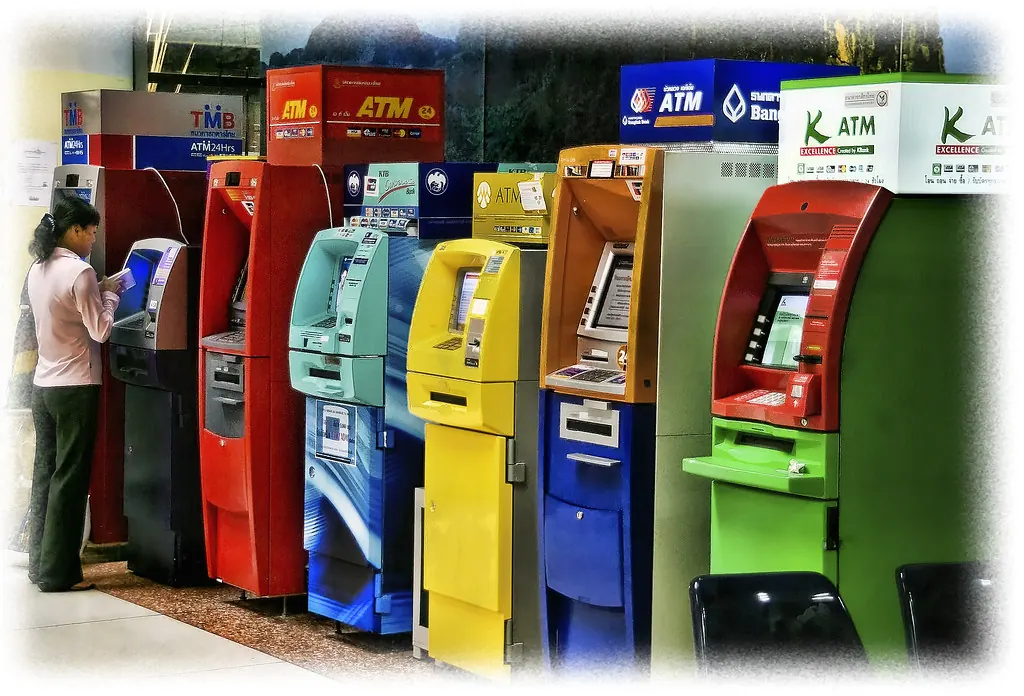
Bring some cash. Cards work in malls and chain restaurants, but street food, markets, taxis, and small guesthouses are cash businesses. A couple of thousand baht covers the taxi, the first meal, and small expenses on night one — get it before you fly, or from an ATM at the airport (see the fee note below, not the exchange counter).
Airport exchange counters are the worst rate in the country. If you must change cash at the airport, change the minimum. In the city, licensed booths (SuperRich is the usual benchmark) sit close to the interbank rate.
The ATM fee changed in 2026 — and most guides have not caught up. For years, every Thai ATM charged foreign cards a flat 220 baht per withdrawal. The current published fee schedules at major banks say otherwise: Kasikornbank and Krungsri now charge 250 baht for Visa and 350 baht for Mastercard per withdrawal (schedules effective September 2026). Other banks still show 220–250 baht, and the exact fee is displayed on screen before you confirm — so treat any single number in a guide, including this one, as a snapshot, and read the screen. The fee is flat per withdrawal whatever the amount, so take the maximum in one go (typically 20,000–30,000 baht) rather than withdrawing twice. Your own bank may add its own foreign-transaction fee on top.
5. Your first ride: the metered taxi, the rail link, or a booked car
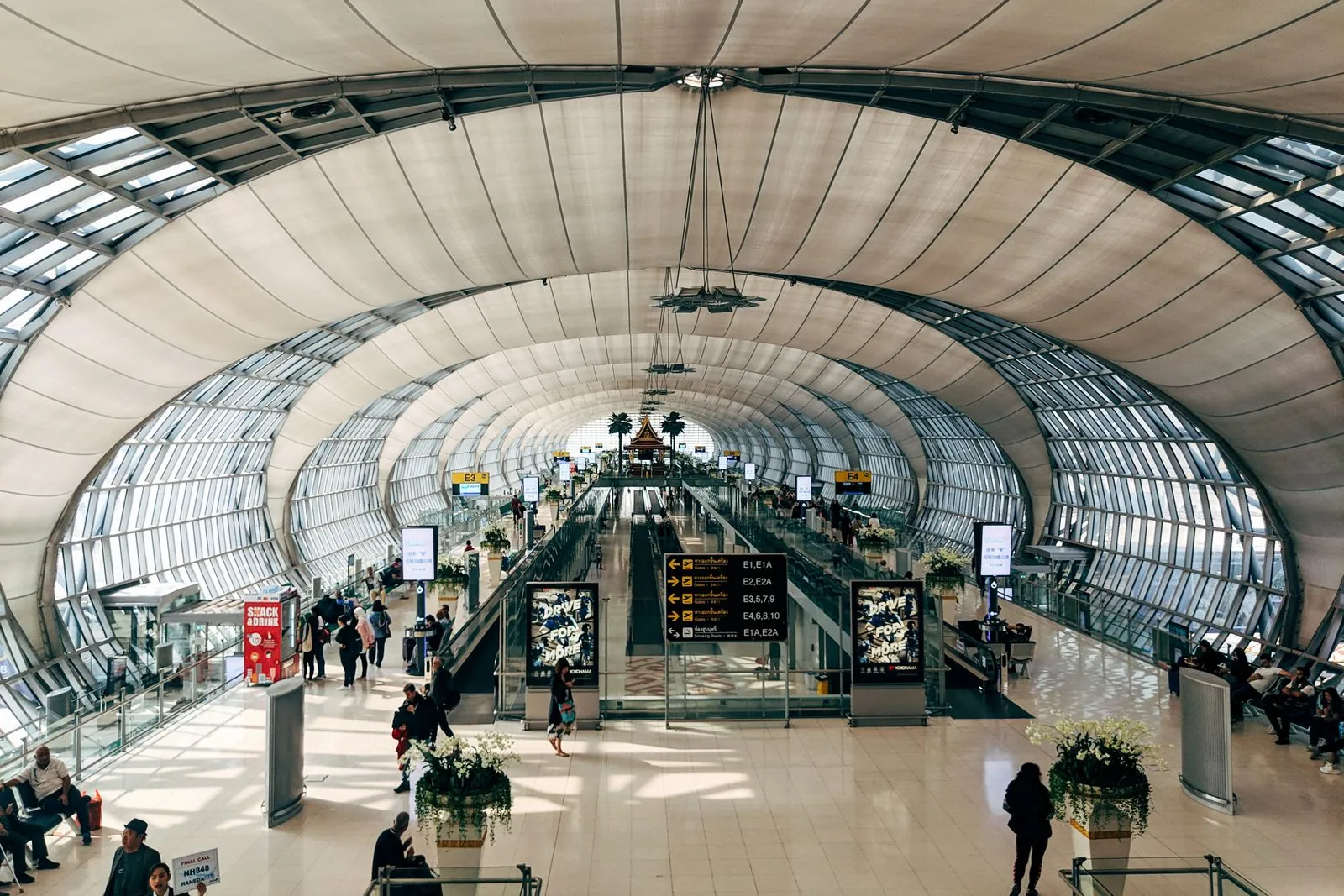
Bangkok has two airports. Most international flights land at Suvarnabhumi (BKK); budget carriers often use Don Mueang (DMK). The rules below are for Suvarnabhumi unless stated.
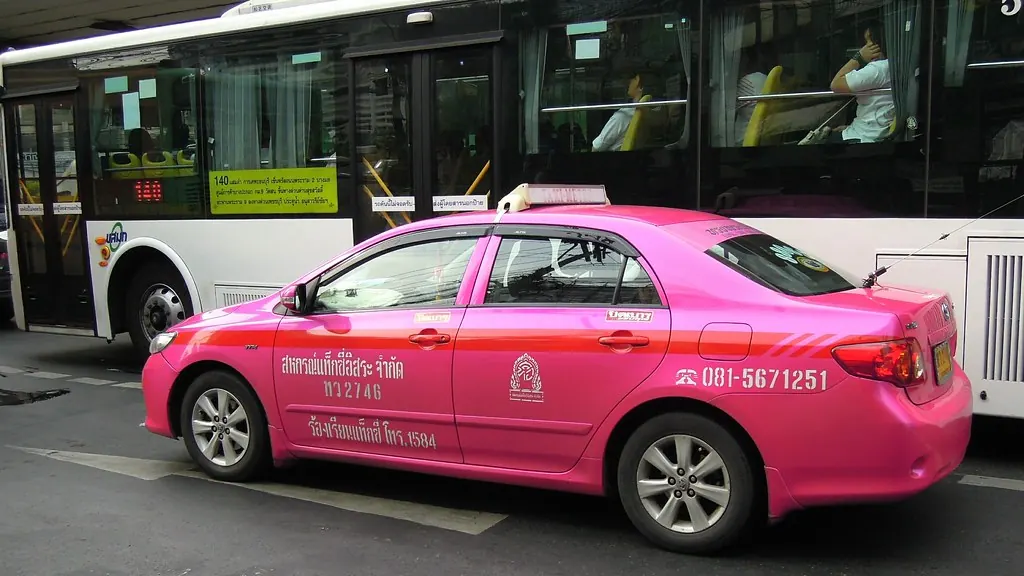
Metered taxi from the official rank — the default choice. After arrivals on Level 2, follow the "Public Taxi" signs down to Level 1, between Gates 4 and 7 (open 24 hours). Take a queue ticket from the machine; it tells you which bay your car is in. The fare is three parts: the meter (from 35–40 baht), a 50 baht airport surcharge paid to the driver, and expressway tolls, which you pay in cash at the booths. Total to central Bangkok is roughly 300–650 baht depending on traffic and route. Two rules: the meter must be running before you move — a flat price quoted before you get in is a refusal to use the meter, not a surcharge — and never accept a ride from anyone who approaches you inside the arrivals hall. If a driver overcharges, note the plate number and call the Department of Land Transport on 1584.
Airport Rail Link — cheapest, if your hotel is near a station. From Level B1 to Phaya Thai (BTS) in about 30 minutes, 45 baht, running 05:30–24:00. Ideal with light bags and a station-side address; a poor choice with heavy luggage or a late arrival.
Grab — the app fallback. Official pickup is Level 1, Gate 4 (outer curb). Expect roughly 450–700 baht to central Bangkok. Useful when the taxi queue is long, but you need data first — which is why section 3 comes before this one. Don Mueang: public taxi counters are at Terminal 1, Floor 1 near Gate 8 and Terminal 2, Floor 1 beside Gate 15. Same formula: meter + 50 baht surcharge + tolls.
6. Check-in and the first night
- TM30 is your host's job, not yours — but confirm it. Thai law requires whoever hosts a foreigner (hotel, landlord, friend) to report the stay to immigration within 24 hours. Hotels do this automatically. If you are staying with a friend or in a private rental, ask whether it has been filed — it matters later if you extend a visa or apply for anything at immigration.
- Hotel deposits are normal. Many hotels hold a cash deposit or a card pre-authorisation at check-in. Ask what is held and when it is released, and keep the receipt.
- Do a 10-minute first-night check: data working, Grab installed with your hotel address saved, cash in your wallet, and the emergency numbers below saved in your phone. Everything after that can wait until morning.
7. If something goes wrong
Save these before you land. All calls are free.
| Number | Who | When |
|---|---|---|
| 1155 | Tourist Police — 24/7, English and 7 other languages | Anything tourist-related, scams, theft, translation help |
| 191 | Police | Emergency |
| 1669 | Ambulance / medical emergency | Medical emergency |
| 199 | Fire | Fire |
| 1111 | Government complaints centre | Non-emergency complaints about officials or services |
The Tourist Police also run a free app ("Thailand Tourist Police") with live chat and GPS dispatch. If your passport is lost or stolen, call 1155 first — then contact your embassy; a police report is what your insurer and your embassy will ask for.
Affiliate link
Get a Thailand eSIM from YesimThis is an affiliate link: we may earn a commission if you buy through it, at no extra cost to you. It does not change what we recommend.
Say it in Thai
Learn the phrases from this guide, then practise them in a full dialogue.
Practise dialogues
Phrase pages