Arriving in Thailand · Guide
How Much Does It Cost to Live in Thailand for a Month? Every City, Three Budgets (2026)
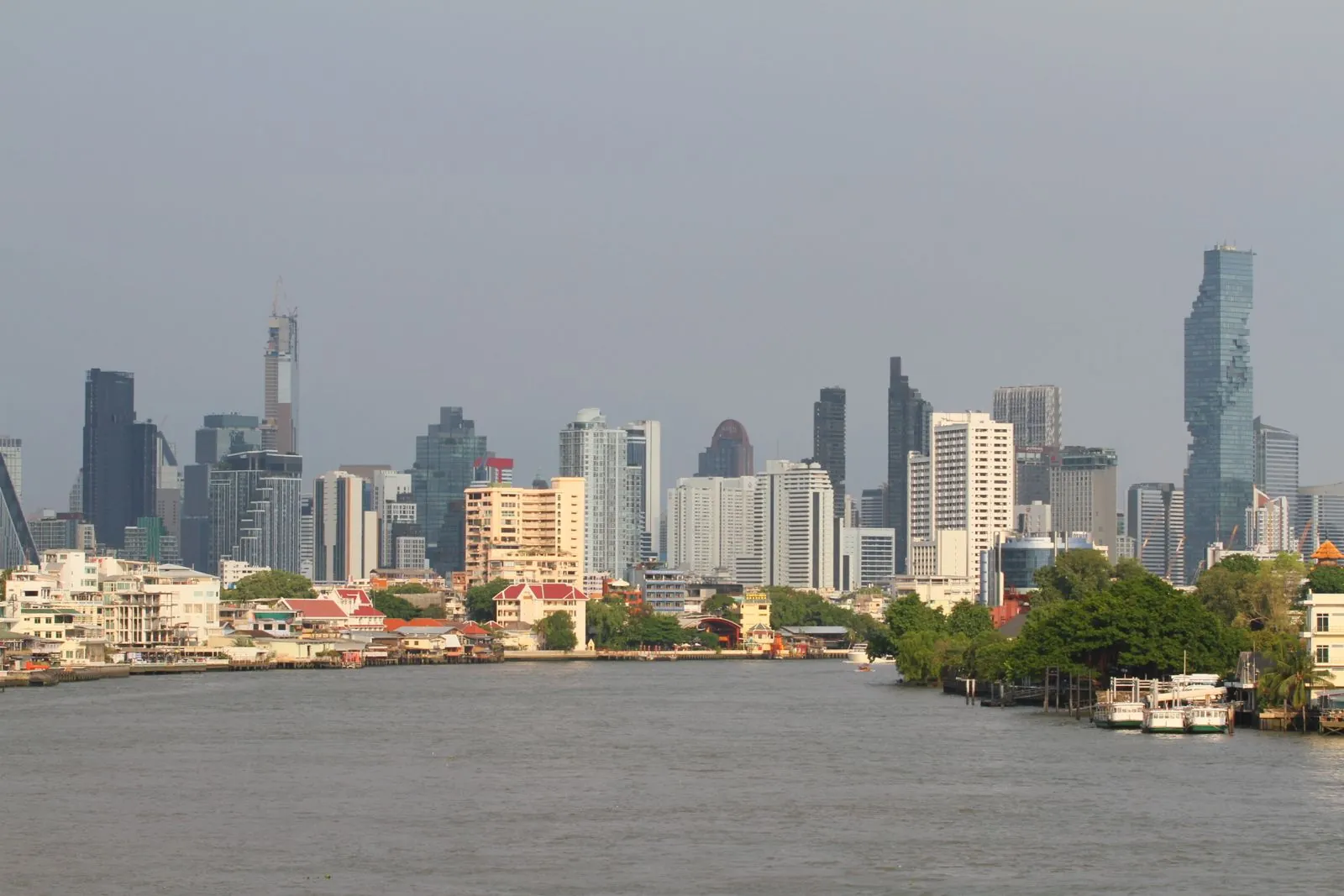
The short answer is that Thailand is not one price. The same comfortable month — a modern one-bedroom, a coworking membership, eating out most days, a scooter or a train pass, a gym, a normal social life — costs roughly ฿36,000 in Chiang Mai, ฿45,000 in Bangkok, and ฿50,000–80,000 in Phuket. The cheapest city and the dearest island are more than twice apart, and almost all of the gap is rent. This guide prices seven cities the same way, so the comparison is honest, then shows which lines move the total and which city fits which life.
Published Updated
Entry rules and prices change. This guide shows its last check date in the fact-check box below — re-check the visa section before you fly.
Fact check
- Checked on
Sources
- Thai e-Visa portal — Ministry of Foreign Affairs
- Thailand Digital Arrival Card — Immigration Bureau
- Numbeo cost of living database
- Wise — exchange rates and transfers
- SafetyWing — nomad insurance pricing
Dates and sources below come from the article data file. Where official pages do not publish a figure, the article says so instead of picking one number.
At a glance: the comfortable month, city by city
| City | Comfortable month (one person) | What makes it that price |
|---|---|---|
| Hua Hin | ฿30,000–45,000 ($895–$1,340) | Cheapest seaside base; small-town rents, retiree pace |
| Chiang Mai | ฿36,000–50,000 ($1,075–$1,490) | Cheapest big city; rent is the whole advantage |
| Pattaya | ฿38,000–55,000 ($1,135–$1,640) | Beach-city rents without Bangkok prices; huge condo supply |
| Bangkok | ฿45,000–70,000 ($1,340–$2,090) | Rent by train station; everything else is close to Chiang Mai prices |
| Phuket | ฿50,000–80,000 ($1,490–$2,390) | Island premium on everything; rent doubles in high season |
| Koh Samui | ฿55,000–90,000 ($1,640–$2,690) | Small-island supply; the widest price spread in this table |
| Krabi | ~฿35,000 off-season to ~฿70,000 high season | Resort pricing: the season is the budget, not the city |
Hua Hin and Chiang Mai overlap — the two are in the same band, and the difference between them is lifestyle, not money. Koh Samui's band is the widest because the sources disagree by almost two times; the high-season warning in section 7 explains why. Krabi's row is a range across seasons, not a single comfortable band, because that is how the only recent source prices it — treat it as indicative, not precise.
The national range, for orientation: a solo month in Thailand runs from about ฿16,000 (lean, Chiang Mai — cook, walk, work from cafés) to ฿100,000+ (premium island life — sea-view condo, Western food daily, beach clubs). Most people reading this guide will land in the comfortable band of whichever city they pick.
1. How to read these numbers
Every number in this guide uses the same three definitions, so the cities compare like for like. Other cost guides use different definitions — that is why their totals disagree with each other by 30% or more, and why this guide states its rules up front.
- Lean means a budget studio, street food and cooking, walking and songthaews, cafés and free workspaces, a local SIM. Comfortable means a modern one-bedroom, a coworking membership, eating out most days, a rented scooter or a train pass, a gym, a normal social life. Generous means a premium flat, the top coworking space, Western restaurants daily, a car or frequent Grab, weekend trips.
- Excluded from every monthly total: visa fees, health insurance, and flights. They are priced separately in section 6, because lumping them into the monthly number is how the "live on $600 a month" myth survives. A Chiang Mai month that looks like ฿36,000 is ฿36,000 before the visa and the insurance.
- Rent is a long lease. All rent bands assume a furnished unit on a 6–12 month direct lease. A one-to-three-month let typically runs 20–40% above the long-lease rate, and Airbnb's monthly rate is the most expensive way to rent the same room. On the islands the short-let premium is larger still — see section 7.
- Prices are ranges, not quotes. Where two good sources disagree, this guide gives the wider band and says so in the fact-check notes, instead of picking the number that makes the prettiest table.
2. Rent: the line that decides everything
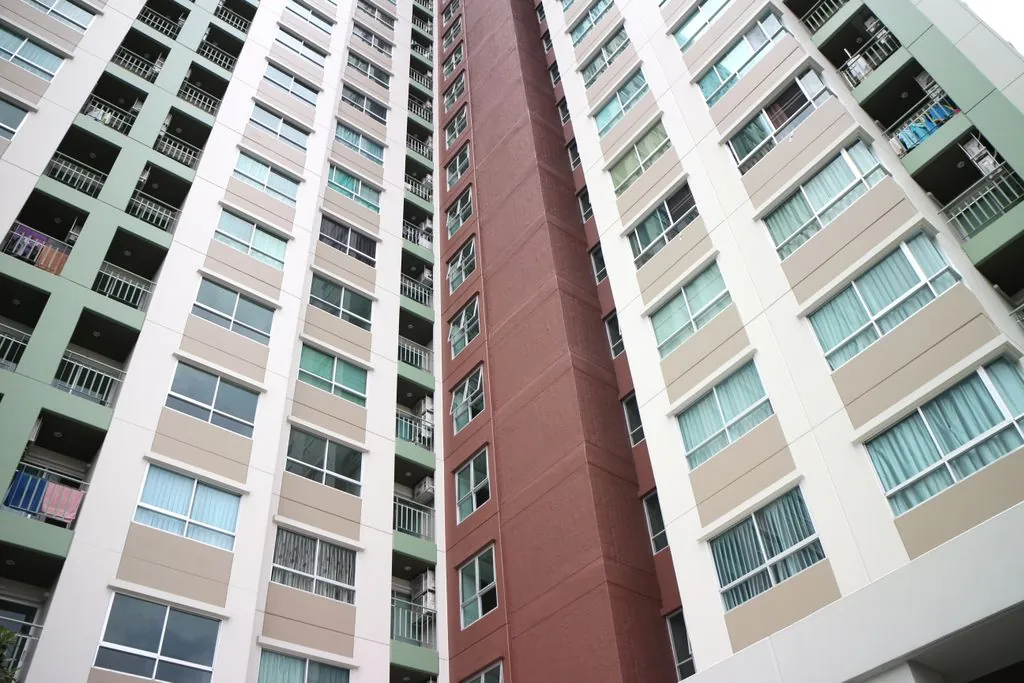
Rent is roughly a third to a half of any Thai budget, and it is the line where the old blogs are most out of date. The table below is for a furnished one-bedroom on a 6–12 month direct lease.
| City | One-bedroom, monthly |
|---|---|
| Chiang Mai | ฿8,000–22,000 (Santitham ฿8,000–14,000; Old City ฿8,000–15,000; Nimman ฿12,000–22,000) |
| Hua Hin | ฿8,000–15,000 (city-centre condo; Numbeo's October 2026 crowd data puts the centre average higher, at ฿19,150) |
| Pattaya | ฿10,000–25,000 (studio ฿10,000–15,000; one-bedroom in Pratumnak/Naklua ฿15,000–25,000) |
| Bangkok | ฿8,000–35,000 by area (Bang Na ฿8,000–14,000; On Nut ฿10,000–18,000; Sukhumvit ฿20,000–35,000) |
| Phuket | ฿15,000–30,000 (mid-range; budget studio/1-bed ฿8,000–15,000 in Rawai/Kathu) |
| Koh Samui | ฿13,000–28,000 (Numbeo October 2026: ฿13,180 outside the centre, ฿28,364 in the centre) |
| Krabi | Not separately priced in any source checked this round — see the resort band in the master table |
- Move-in costs three months' rent. The standard Thai lease is a two-month security deposit plus one month in advance. A ฿12,000 room needs ฿36,000 on day one; a ฿25,000 Bangkok room needs ฿75,000.
- Electricity is often marked up. The official government rate is about ฿3.9–4.95 per unit, but many landlords and buildings charge ฿7–9 per unit. Ask who bills the electricity and at what rate before you sign — heavy air-conditioning at the marked-up rate adds ฿1,000–3,500 a month. On the islands, where air-conditioning runs all day, the electricity line is bigger still: Koh Samui budgets put it at ฿2,000–8,000 a month.
- Negotiate. Monthly rates commonly come down 15–25% below the advertised 30-day rate for a 6–12 month commitment, and Pattaya is a renter's market — 10–20% off the asking rent is realistic there, with high supply and frequent vacancies.
3. Food: the same plate, different prices
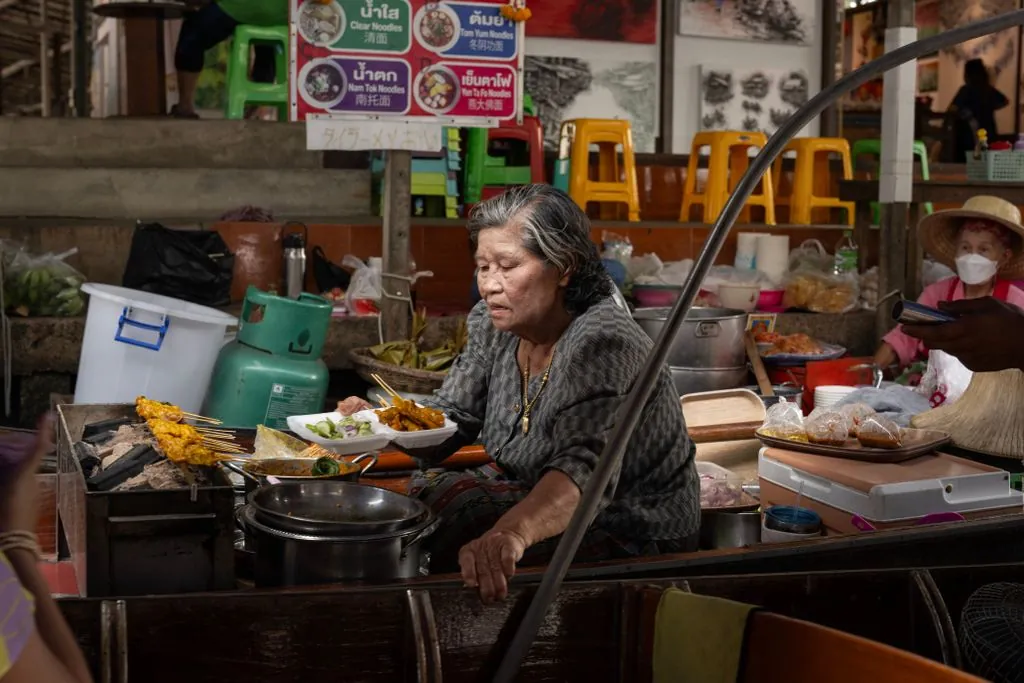
Food is the easiest line to control and the hardest to predict, because Thailand lets you eat at two completely different price levels on the same street. The gap between cities is smaller than the gap between eating Thai and eating imported.
- Street food: a plate runs ฿30–60 in Chiang Mai, ฿40–80 in Bangkok, and ฿40–80 in Phuket. Pattaya and Hua Hin sit in the same band as Bangkok for street food; the plate is not where those cities get expensive.
- Monthly food, mixed: eating out most days with some cooking lands around ฿6,000–9,000 in Chiang Mai, ฿8,000–12,000 in Bangkok, and ฿12,000–20,000 in Phuket at the comfortable level (Phuket's mid-range food band is ฿15,000–25,000, which includes more Western restaurants). Groceries run ฿4,000–6,000 in Chiang Mai, ฿5,000–8,000 in Pattaya and Hua Hin, and ฿8,000–12,000 in Phuket for a mostly-local basket.
- The Western premium is real everywhere. Eat Western food at Western cafés every day and the food line doubles, in every city in this guide. Phuket is where the premium bites hardest — imported groceries and fine dining are the island's most expensive habit, with premium food budgets running ฿30,000–60,000 a month.
4. Getting around: a train pass, a scooter, or a car
- Bangkok: ฿2,000–4,000 a month. The one city where public transport wins. A BTS trip costs ฿17–65 by distance; the MRT Blue Line ฿17–44. Two medium trips a day, 22 days a month, is roughly ฿1,500–2,900 on trains, plus Grab for the last mile.
- Chiang Mai: ฿3,000–4,000 a month plus about ฿500 in fuel for a rented 125cc scooter — the default setup. No scooter, and songthaews plus walking cover the Old City and Nimman for ฿500–1,000.
- Pattaya: ฿2,000–3,500 a month for a rented scooter. There is no mass public transport; songthaews (baht buses), Grab, Bolt, and your own scooter are the practical options.
- Phuket: ฿3,000–4,500 a month for a reliable 150cc scooter rental. Phuket has no rail or metro system; a light rail project is planned but not yet operating.
- Hua Hin, Koh Samui, Krabi: a scooter is the default and a car is common on the islands — but no reliable monthly band for car rental was found in the sources checked this round, so this guide gives no number rather than a guessed one. Price it yourself before you pick an island: a car changes the transport line more than any other single choice in this guide.
One rule everywhere: get an international driving permit with a motorcycle endorsement before you arrive. Riding on a car-only licence is the most common legal mistake in this guide, and it voids most travel insurance.
5. Where to work: coworking, cafés, or your condo
- Chiang Mai: monthly hot-desk ฿2,500–6,000 (Punspace ฿3,899, Yellow ฿5,990, CAMP for the price of a drink, 24 hours). Just over 20 dedicated spaces — the densest nomad community in Asia.
- Bangkok: monthly hot-desk ฿2,500–7,000 (The Hive ~฿4,000–5,000, JustCo ~฿5,000–5,500, WeWork from ฿6,057 on a 12-month plan). Bigger, more professional, better for meeting clients.
- Phuket: hot desk ฿3,000–5,000, monthly membership ฿5,000–8,000. Fewer spaces than the two big cities, and the beach is the competition.
- Pattaya, Hua Hin, Koh Samui, Krabi: no published coworking band was found in the sources checked this round. Cafés and condo fibre are the fallback — fibre is widely available at ฿600–1,200 a month, with reported average fixed-line speeds around 210 Mbps in Chiang Mai. Check the actual speed in the room before you sign, in any city.
6. The lines outside the monthly total: visa and insurance
Visa. The DTV is the visa most long-stayers now use — five years, 180 days per entry, extendable once by 180 days. Priced as a monthly cost it is small but not zero: the ฿10,000 government fee plus one ฿1,900 extension spread over a year of stay works out to roughly ฿1,000 a month, before the cost of the documents themselves. Our full DTV guide covers the 2026 rules, the 500,000-baht seasoning requirement, and the refusal traps.
Insurance. A nomad policy is not optional for a long stay — a single hospital visit in a private hospital can cost more than a month's rent, and riding a scooter on a car-only licence voids most policies. As a price anchor, SafetyWing's Nomad Essential plan runs about $56–63 per 4 weeks for ages 18–39 in 2026 (billed every 28 days, so 13 charges a year; the fuller Complete plan is about $177.50 a month) — but premiums step up steeply with age, and this is travel-medical cover, not comprehensive health insurance. Get your own quote; treat any guide that quotes one flat number as a guess. Our medical and insurance guide (in preparation) covers the private-hospital price bands and how to buy.
7. The seasons that break the budget
Two seasons in Thailand are not weather — they are budget events, and neither appears in the monthly table.
Chiang Mai's burning season (late February–April). Agricultural burning fills the mountain-ringed valley with smoke every dry season; March is the worst month. On 1 April 2026 Chiang Mai's air quality index hit 235 and the city ranked as the world's most polluted major city for the fourth day running. Most long-stayers leave for about six weeks — six weeks at Bangkok comfortable rates costs ฿67,500–105,000 before flights, plus any rent paid on an empty room back home. Spread over the year that adds ฿5,600–8,750 a month to Chiang Mai's headline number. Or time your year so the smoke season is your travel season anyway.
The islands' high season (November–February). Phuket, Koh Samui and Krabi run on the opposite calendar: the dry, cool months are peak season, and short-let rents spike. A one-bedroom with a pool in Phuket runs ฿22,000–35,000 a month on a short stay against ฿16,000–22,000 on an annual lease — the same room, a third dearer, because of the month you arrive in. One recent estimate puts a normal resort-city month at about $2,000–2,200 in high season and about $1,000–1,100 off-season — the season doubles the budget. The move that saves the most money on an island is the least glamorous one: arrive in the low season, and lock in a yearly lease after 1 March, when short-let demand falls away.
Bangkok's air has its own cool-season PM2.5 spikes (December–February), but they are shorter, milder, and never close the city for weeks. Bangkok's real climate cost is heat: it is hot all year.
8. Which city for which life
- Cheapest month, big-city life: Chiang Mai — if you work online, like walking to cafés, and can leave town (or seal yourself indoors) from late February to April.
- Cheapest month, seaside life: Hua Hin — if you want the beach without the island premium, and a slower, older, retiree-heavy pace suits you.
- Best value beach city: Pattaya — if you want a sea view and a huge condo market at Bangkok-beating rents, and the city's reputation does not bother you.
- Work, flights, hospitals, all year: Bangkok — if you need top-tier specialist healthcare nearby, fly internationally often, want a deep job and networking market, or want a city that runs at full speed all twelve months.
- Island life, priced honestly: Phuket — if the beach is the point and you can pay the premium, arrive off-season, and sign a yearly lease. Koh Samui and Krabi are the same deal at a smaller scale, with thinner coworking and transport options.
- The paperwork is identical in every city. The DTV visa, the 90-day reporting, the 180-day tax-residency rule, the SIM card, the bank account — none of it changes with the city. Choose on lifestyle and cost, not on bureaucracy.
Keep reading
- Cost of Living in Chiang Mai for Digital Nomads — the Chiang Mai numbers in this overview, line by line, with the three budget tiers. Find it in the guides hub.
- Bangkok vs Chiang Mai for Living — the full-year math: Chiang Mai's cheap months, minus the smoke-season escape. Find it in the guides hub.
- Thailand DTV Visa Guide — the visa every budget in this guide assumes, with the 2026 document rules and the 500,000-baht proof. Find it in the guides hub.
- Thailand Arrival Checklist — the first 72 hours: TDAC, the 30-day rule, SIM, money, and your first ride. Find it in the guides hub.
- Thailand 180-Day Tax Rule in Plain Language — what happens after you have been here 180 days: Por 161/162 and the pre-2024 savings exemption. Find it in the guides hub.
Coming next in this cluster: the Bangkok cost guide on the same basis as the Chiang Mai one, and the eSIM / SIM chooser.
Affiliate link
Get a Thailand eSIM from YesimThis is an affiliate link: we may earn a commission if you buy through it, at no extra cost to you. It does not change what we recommend.
Say it in Thai
Learn the phrases from this guide, then practise them in a full dialogue.
Practise dialogues
Phrase pages