Arriving in Thailand · Guide
Thailand eSIM or SIM Card: How to Choose (2026)
Last checked: 14 November 2026. Prices below are snapshots from provider pages checked from late October to mid-November 2026 — eSIM prices move often, so treat every dollar figure as a snapshot and confirm at checkout. The baht figures for tourist SIMs are steadier: their price levels have held for several years. All dollars are US dollars; baht converts at ฿33.5 = $1. The short version: if your phone takes an eSIM, install one before you fly and you are online the moment the plane lands. If it does not — most mainland-China iPhones do not — buy a tourist SIM at the airport arrivals counter; it is cheaper per day, gives you a Thai phone number, and takes about five minutes including the passport and face check. The wrong choice is not either of these. The wrong choice is landing with no plan, paying your home carrier's roaming day pass for a week, and then buying whatever the first tout offers.
Published Updated
Entry rules and prices change. This guide shows its last check date in the fact-check box below — re-check the visa section before you fly.

Fact check
- Checked on
Sources
- Yesim — Thailand eSIM plans (fixed prices confirmed on Yesim's own blog)
- Saily — Thailand eSIM plans and prices
- Airalo — Thailand eSIM plans and prices
- Holafly — Thailand unlimited eSIM price table
- AIS — Lucky Tourist SIM official prices
- True — Thailand Tourist SIM official prices and terms
- Apple Support — using eSIM with your iPhone in China mainland
Dates and sources below come from the article data file. Where official pages do not publish a figure, the article says so instead of picking one number.
At a glance: the decision in 30 seconds
| Your situation | Buy this | Why |
|---|---|---|
| Phone takes eSIM, trip under 2 weeks | A fixed-data eSIM (Yesim, Saily or Airalo) | Cheapest for short trips; online before you land; keep your home SIM for SMS codes |
| Phone takes eSIM, heavy user or 2–4 weeks | An unlimited eSIM, or a 30–50 GB fixed plan | Fixed 50 GB beats unlimited on price once you read the fair-use caps in §5 |
| Phone has no eSIM (most China-market iPhones) | AIS or True tourist SIM at the airport | No eSIM will install, whatever the seller promises; the physical SIM is the whole answer |
| Staying 2 months, or need a Thai number | AIS or True tourist SIM, 30- or 60-day | Tourist SIMs cap at 60 days; only a physical SIM gives you a Thai number for calls, Grab and restaurant bookings |
| Phone is carrier-locked | Nothing — fix the lock first | A locked phone rejects every eSIM and every Thai SIM; check before you fly (§2) |
1. eSIM or physical SIM? The decision is about your phone, not the price
An eSIM is a data plan you install by QR code before you travel; a physical SIM is a card you buy in Thailand. Both ride the same two Thai networks — AIS and True (dtac merged into True Corporation in 2023 and the two networks were fully combined at the end of 2025, so there are two network groups, not three). Coverage and speed are close enough that the network should not decide it for you. Three things should:
- Can your phone take an eSIM at all? If not, the rest of this section is moot — skip to §4. (§2 tells you how to check in 30 seconds.)
- Do you need a Thai phone number? Travel eSIMs are data-only: no Thai number, no local calls or texts. A tourist SIM gives you a Thai number, free calls inside its own network, and call credit for other networks. You need the number if you will call restaurants and hotels, receive local delivery calls, or register for Thai apps that verify by SMS. You do not need it if Grab, WhatsApp and maps are your whole trip — Grab works fine on data-only.
- When do you need to be online? An eSIM installed at home means maps and Grab work on the runway, before you have found the SIM counter or the airport Wi-Fi. A physical SIM means a queue at the arrivals counter — usually a few minutes, up to 30 on a peak Saturday morning — and no data until it is done.
The dual-SIM trick that makes either choice work: keep your home SIM in the phone for SMS verification codes (banking, email, two-factor logins), and put Thai data on the second line — eSIM or physical. Turn data roaming on for the Thai line only, and off for the home line, or your home carrier will bill you roaming rates for background data.
2. Will your phone take an eSIM? Check before you buy anything
Every iPhone from the XS (2018) onwards, every Pixel from the 3 onwards, and every Galaxy S from the S20 onwards has eSIM hardware — with one large regional exception and one lock exception.
The regional exception — mainland-China iPhones. iPhones sold in mainland China ship with two physical nano-SIM slots instead of an eSIM chip, so most of them cannot install a travel eSIM at all, on any iOS version. The exceptions, per Apple's own support page (re-checked November 2026), are the iPhone Air, the iPhone Duo, the iPhone 17e, and the iPhone 18 Pro / 18 Pro Max — those do have eSIM, and the Air and Duo are eSIM-only models with no SIM tray at all. Every other China-market iPhone, from the XR through the iPhone 17 / 17 Pro / 17 Pro Max, is physical-SIM only. One open question even for the exceptions: Apple does not say whether those models accept a foreign carrier's travel eSIM, so if you carry one of them, check with the eSIM provider's IMEI checker before you pay. The Chinese version of this guide expands this section; the English rule is simple: China-market iPhone, assume no eSIM until your phone proves otherwise.
How to check in 30 seconds. Dial *#06#: if you see a 32-digit EID number, the phone has eSIM hardware. No EID means no eSIM. On an iPhone the same check is Settings → General → About: look for an EID entry, and under Carrier Lock it must say “No SIM restrictions”. A locked phone accepts only its original carrier's plans — no travel eSIM and no Thai SIM will work until the lock is lifted, and that is a call to your home carrier before you fly, not something an airport counter can fix.
Android is messier. Most China-market Android phones (Xiaomi, Huawei, OPPO, vivo) do not support eSIM either. The same *#06# EID check applies; no EID, no eSIM.
3. eSIM plans compared: what the money buys
Four brands dominate the Thailand eSIM comparison pages, all riding AIS and/or True with 5G. Prices checked 25 October–14 November 2026.
| Plan (30-day validity unless noted) | Yesim | Saily | Airalo | Holafly |
|---|---|---|---|---|
| 1 GB | $3.12 | $2.99 (7 days) | $4.00 (3 days) | — (unlimited only) |
| 5 GB | $8.40 | $7.99 | $7.00 (7 days) | — |
| 10 GB | $13.20 | $10.99 | $11.00 | — |
| 20 GB | $20.40 | $19.99 | $18.00 | — |
| 50 GB | $40.80 | — | $27.50 | — |
| Unlimited, 7 days | $21.60 | $20.99 | $21.00 | $27.50 |
| Unlimited, 30 days | $45.60–47.63 | $48.99 | $49.00 | $73.90 |
| Network | DTAC per Yesim; aggregators list AIS / DTAC / True | AIS / True | AIS / True | True / dtac |
| Phone number | Data-only, except the 30-day unlimited plan includes local calls and texts | Data-only | Data-only | Data-only |
Reading the table:
- Yesim is this site's eSIM partner, so it is the link in this guide — and it is genuinely competitive in the middle: 10 GB for $13.20 and 20 GB for $20.40, with the cheapest 30-day unlimited of the four at $45.60–47.63. Its 50 GB plan at $40.80 is not the cheapest big bucket; Airalo's 50 GB at $27.50 is. One caution that belongs in the open: Yesim publishes no fair-use policy for its unlimited plans, so there is no documented full-speed allowance — see §5 before choosing unlimited for hotspot-heavy use.
- Saily (by the NordVPN team) is the cheapest or within a cent for 30-day plans up to 10 GB: 1 GB for $2.99, 5 GB for $7.99, 10 GB for $10.99. Its unlimited is effectively tied with Airalo at every length.
- Airalo wins the short trip and the big bucket: its 3- and 7-day plans are up to $1 cheaper than Saily's when your trip fits the window, and its 50 GB for $27.50 is the best per-gigabyte price in the table. It is also the only one of the three selling 50 GB.
- Holafly sells unlimited only, by days not gigabytes, and costs noticeably more in Thailand — about $6 more for a week and $25 more for a month than Saily or Airalo. Its pitch is simplicity, not price. Hotspot sharing is capped (see §5).
- Nomad is worth one line: 10 GB for $10 and 50 GB for 10 days at $15 (25 October 2026) make it the cheapest 10 GB in the comparison round — but it is not this site's partner, so it is listed for completeness, not linked.
The honest summary: for a week or less, Saily or Airalo on a small fixed plan; for a month of normal use, Airalo's 20–50 GB fixed plans; for heavy use, read §5 first, because “unlimited” is where the money hides.
4. Tourist SIMs compared: the airport counter is still the best value
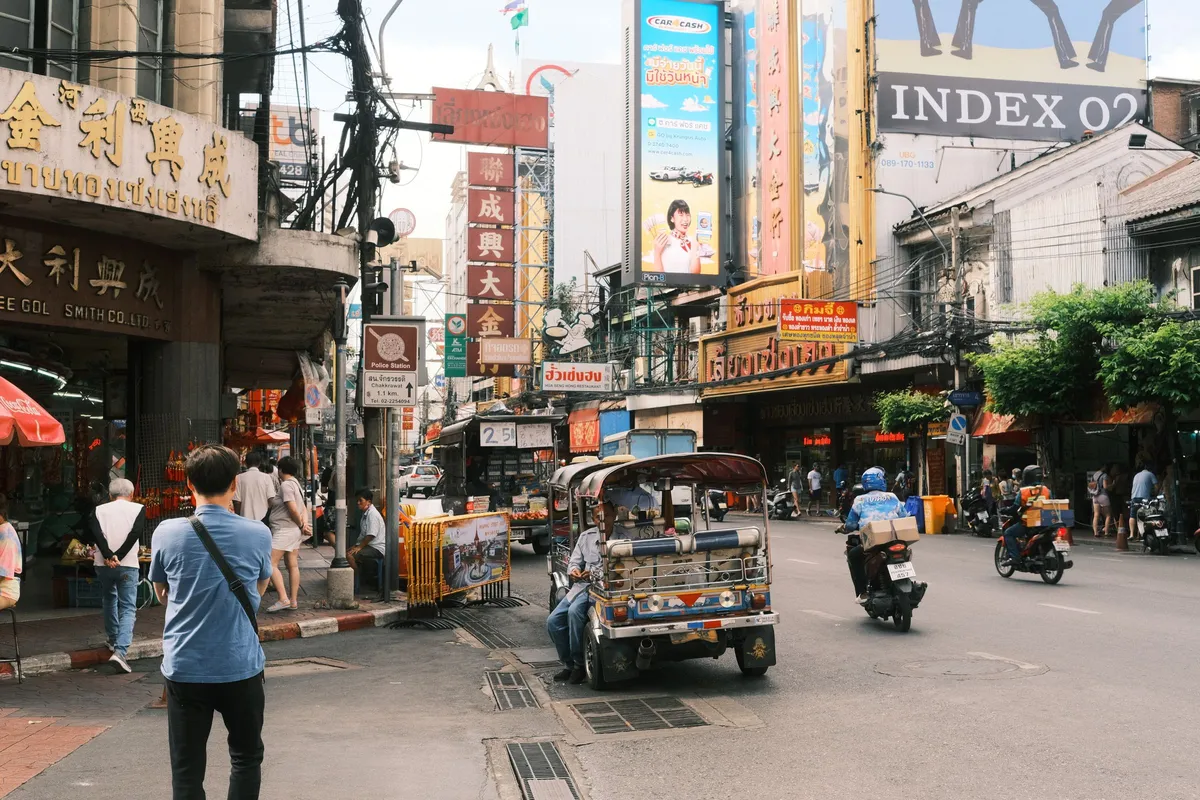
Buy at the operator counters in the arrivals hall — Suvarnabhumi, Don Mueang, Phuket, Chiang Mai and Koh Samui all have them, after customs. Prices at the airport are the same as in town, so there is no saving in waiting, only a queue to skip if you already have an eSIM. Both operators' headline packages are unlimited data at max 5G/4G speed.
| Tourist SIM | 8 days | 15 days | 30 days | 60 days | Calls |
|---|---|---|---|---|---|
| AIS Lucky Tourist SIM | ฿499 ($15) | ฿699 ($21) | ฿1,199 ($37) | ฿1,599 ($49) | Free within AIS + ฿100 bonus credit for other networks |
| True / dtac Tourist Infinite SIM | ฿499 ($15) | ฿699 ($21) | ฿1,199 ($37) | — | Free local calls up to 15 minutes per call |
| dtac entry tier (capped data) | ฿299 ($9) | ฿599 ($18) | — | — | 15 GB (8 days) / 30 GB (15 days) per one source; another source says 20 GB for the 8-day tier — see the fact-check box |
Two more options on the same shelves: a 1-day AIS SIM, 1 GB capped at 10 Mbps for ฿49, and a True/dtac data-only 10-day SIM for ฿349 that restricts outgoing calls. The 8-day tier is the value pick for a typical one-to-two-week trip — ฿499 for unlimited max-speed data plus a Thai number, against $21 for a week of eSIM data with no number. (True's 8-day SIM is sometimes promoted at ฿449 through airline partners, on presentation of a boarding pass; ฿499 is the standard counter price.) The 30-day tier at ฿1,199 ($37) undercuts every 30-day unlimited eSIM except Yesim's, and includes the number.
Which operator? AIS is the larger network and independent 2026 testing credits it with stronger coverage and consistency, particularly on islands and in rural areas; True posts the fastest download speeds in cities. For a Bangkok–Chiang Mai trip it barely matters. For island-hopping or trekking in the north, AIS. Since the networks merged, dtac and True are the same antennas — pick whichever counter has the shorter queue.
5. “Unlimited” means throttled: read the fair-use cap before you pay
No unlimited plan in this guide delivers unlimited full-speed data. Every one has a ceiling, after which your speed drops — and the ceilings differ enough to change the choice.
| Provider | Full-speed allowance on “unlimited” | Then |
|---|---|---|
| Yesim | No fair-use policy published | Undocumented — treat speed claims with caution |
| Saily | 5 GB per day | 1 Mbps |
| Airalo | 5 GB per day | 1 Mbps |
| Holafly | No daily cap stated for your own phone | Hotspot sharing capped at 1 GB per day (Holafly's own plan page: a 7-day plan includes 7 GB of sharable data) |
| AIS / True tourist SIM | Unlimited at max speed as sold | Fair-use policy applies; speeds may drop past an undisclosed volume |
The practical consequence: a fixed 50 GB plan is honest about what you get, and for most travellers it is cheaper than unlimited. Airalo's 50 GB for $27.50 beats its own 30-day unlimited at $49.00 — you would have to burn more than 50 GB in a month for unlimited to win, and past 5 GB in a day the unlimited plans throttle you to 1 Mbps anyway. Unlimited only wins if you genuinely stream and hotspot all day, every day — and even then, Yesim's undocumented cap is a gamble, not a feature.
6. Registration: passport, face scan, and the three-SIM cap
Every Thai SIM — physical or eSIM bought from a Thai operator — is registered to its buyer. Since August 2025 the seller also takes a live facial scan at registration, on top of the passport check. A further rule that took effect in May 2026 caps non-Thai nationals at three SIM cards per operator, requires registration to happen in person at a shop or authorised dealer, and requires any registered SIM to be activated within 60 days.
What this means in practice:
- Bring your passport to the counter. No passport, no SIM — a photo of it is not enough at most counters.
- Tourist SIMs last at most 60 days. There is no top-up extension past expiry; staying longer means re-verifying identity by SMS or in person, or buying a regular prepaid plan at a shop, again with your passport.
- Travel eSIMs bought online skip the counter — they verify by email, not passport and face scan — which is part of why they exist. But the Thai operator eSIMs sold through ais.th and true.th follow the same registration rules as the physical card.
- Do not buy from a tout. The counter price is the town price; anyone offering a “discount” SIM outside the arrivals hall is selling you a pre-registered number, which is exactly the practice the face-scan rule was written to stop.
7. How much data do you actually need?
Planning bands, not promises — your usage depends on how much video you watch and whether you hotspot a laptop. As a rough guide for one person:
- Light — 1–2 GB a week. Maps, Grab, messaging, light browsing, no video. A 5 GB plan covers a two-week trip.
- Normal — about 10 GB for two weeks. Social media, video calls home, some streaming, photos uploaded daily. A 10–20 GB plan is the comfortable pick.
- Heavy — 30–50 GB a month, or unlimited with eyes open. Daily streaming, hotspot for a laptop, video uploads. Take the 50 GB fixed plan over unlimited unless you have read §5 and still want it.
Two habits move the number more than any plan choice: downloading offline maps and playlists on Wi-Fi before you go out, and letting the hotel Wi-Fi take the video calls. A traveller who does both rarely breaks 10 GB in two weeks.
8. Setup: install before you fly, in this order
- Check the lock and the EID (§2). No SIM restrictions, EID present — or stop here and buy a physical SIM.
- Buy and install the eSIM at home, on Wi-Fi. Scan the QR code, let the profile install, and leave the line switched off until you land. Do not delete the QR email until the trip is over — reinstalling needs it.
- Label the lines. iPhone and Android both let you name the lines: “Home” and “Thailand”. Set the Thailand line as the data line and the home line as the voice/SMS line.
- On landing, switch the Thailand line on and turn data roaming on — for that line only. The most common “my eSIM doesn't work” report is data roaming off for the Thai line. The second most common is data roaming left on for the home line, which is how the $10-a-day bill happens.
- If it still shows no service: toggle airplane mode once, restart the phone, and check the provider's APN instructions — some eSIMs need the APN entered by hand. If it still fails, the airport Wi-Fi plus the operator counter is the fallback; keep the eSIM provider's support chat open on Wi-Fi while you sort it.
For a physical SIM, the counter does steps 2–4 for you: hand over the passport, look at the tablet camera for the face scan, wait for the confirmation SMS, and check that data works before you walk away. Keep the SIM ejector tool and your home SIM somewhere you will not lose them — a surprising number of trips end with a home SIM in a hotel drawer.
9. The short version
- Short trip, eSIM phone: Saily or Airalo fixed plan, installed before you fly. 5–10 GB is enough for most people.
- Month or heavy use: Airalo 50 GB for $27.50, or Yesim 30 GB for $27.60 — both cheaper than any unlimited plan once you read the caps.
- China-market iPhone (most models): forget eSIM entirely; an AIS or True ฿499 tourist SIM at the airport, 8 days, unlimited data plus a Thai number.
- Need a Thai number, staying a while: tourist SIM, 30 days at ฿1,199 or 60 days at ฿1,599 (AIS only for the 60-day tier).
- Whatever you buy: keep the home SIM live for SMS codes, turn roaming on only for the Thai line, and never pay a home-carrier day pass for more than a day.
Prices checked 14 November 2026. eSIM prices change often — confirm at checkout. Tourist SIM prices have held for several years but operators rename packs; if the counter price differs from this guide, the counter is right.
Thailand arrival checklist
TDAC, the SIM, the first baht of cash and your first ride — everything to sort in your first 72 hours.
Read the checklistThailand monthly cost overview
What a month in Thailand actually costs, line by line — the SIM or eSIM is one of the smallest lines in it.
See the cost overviewAffiliate link
Get a Thailand eSIM from YesimThis is an affiliate link: we may earn a commission if you buy through it, at no extra cost to you. It does not change what we recommend.
Say it in Thai
Learn the phrases from this guide, then practise them in a full dialogue.
Practise dialogues
Phrase pages