Arriving in Thailand · Guide
Thailand Visa Extension: How to Extend Your Stay by 30 More Days (2026)
Almost every Thailand itinerary hits the same wall at some point: the stay stamped into your passport at immigration is shorter than the trip you actually planned. The standard fix is the 30-day extension — a single visit to an immigration office, a 1,900-baht fee, and a new date written into your passport. It is a genuinely routine errand, but it has failure modes: a missing TM.30 receipt is the most common reason people get turned away, and the new date is counted from a specific line in your passport that many travellers misread. This guide covers who can extend, the exact documents to bring, how the count works, and what an overstay costs if you never make it to the office.
Published Updated
Entry rules and prices change. This guide shows its last check date in the fact-check box below — re-check the visa section before you fly.
Fact check
- Checked on
Sources
- Royal Thai Immigration Bureau — published rules and fees
- Immigration Division 1, Bangkok — online queue system
- Thailand Digital Arrival Card (TDAC) — official portal
Dates and sources below come from the article data file. Where official pages do not publish a figure, the article says so instead of picking one number.
At a glance
| Item | The rule |
|---|---|
| Who can extend | Travellers admitted visa-free (30-day stamp; earlier 60-day stamps too) and holders of a single-entry tourist visa |
| How many times | Once per entry |
| How long | Up to 30 more days |
| Fee | 1,900 baht, cash, the same at every immigration office |
| Where | The immigration office covering the province where you are staying |
| Must appear in person | Yes — there is no online or mail-in channel |
| Approval | At the officer's discretion — never guaranteed |
| Processing | Usually done the same day |
Who can extend, and by how much
Two kinds of stay are extended by the same 30-day procedure. First, the visa-free entry: since 15 September 2026 that is a 30-day stamp for most visa-exempt nationalities, and travellers who arrived on or before 14 September 2026 still hold the older 60-day stamp — both of those stamps can be extended once. Second, the single-entry tourist visa (TR): it gives 60 days on entry and can also be extended once by up to 30 days.
One extension per entry, in both cases. There is no second 30-day extension waiting behind the first one on a tourist stay. And approval is discretionary: officers approve tourist extensions as a matter of routine, but it is not an automatic right, so never build an unchangeable flight or job commitment on top of it. When asked the purpose of your stay, tourism is the reason to give.
How the 30 days are counted — read the right line

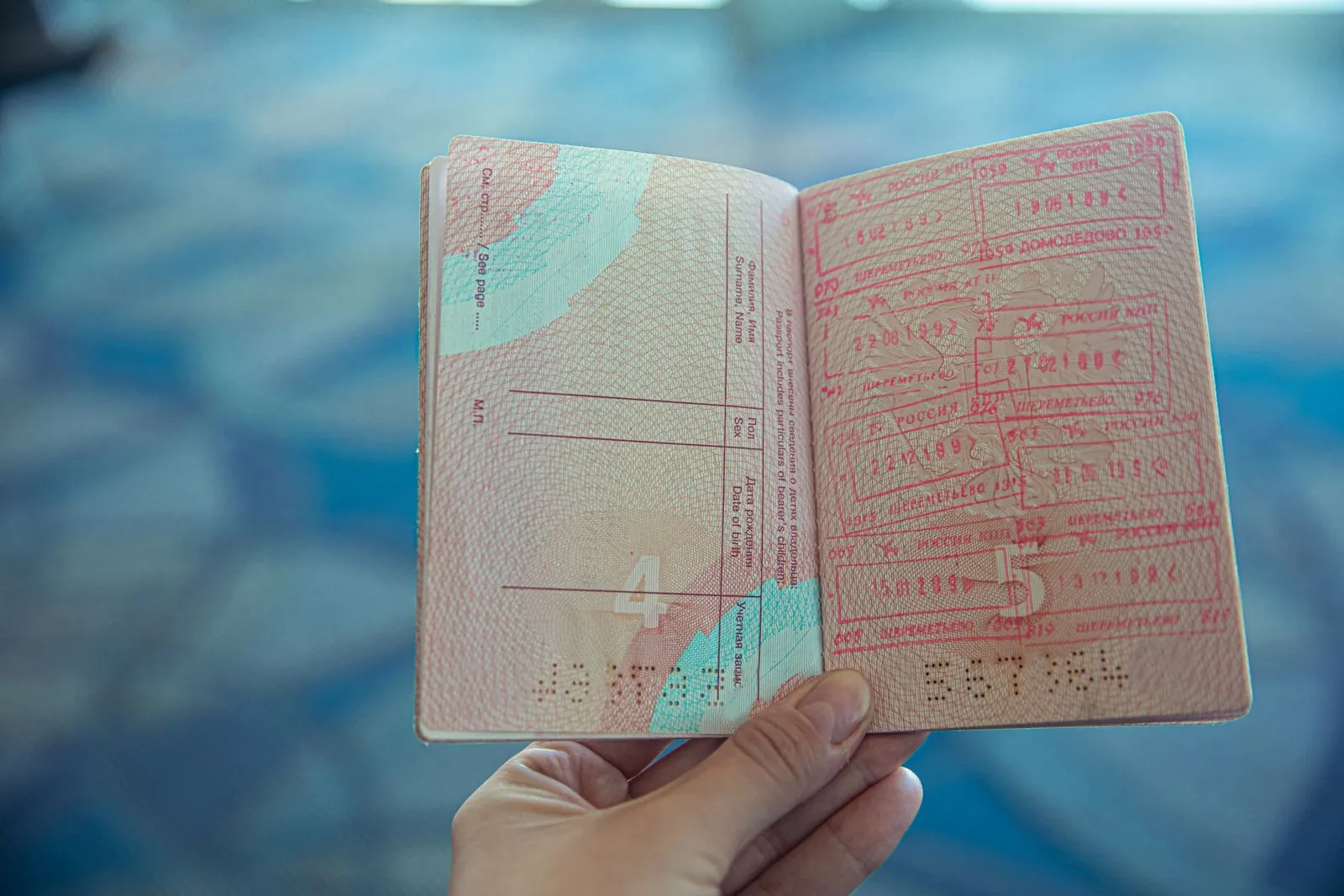
The single most misunderstood detail of the extension: the extra 30 days are added to your "ADMITTED UNTIL" date, not to the day you walk into the immigration office. Look at the entry stamp in your passport. It shows an entry date and, in the same box, the date you must leave — "ADMITTED UNTIL". Your extension runs 30 days from that admitted-until date, whatever day you actually apply.
Two practical consequences. First, applying early does not shorten anything: if your admitted-until date is 10 December and you apply on 1 December, your new permitted stay still runs to 9 January. Second, do not confuse the admitted-until line with the entry date — they differ by your original allowed stay (30 days visa-free, 60 days on a tourist visa), and mixing them up is how people end up 30 days off in their own planning.
Apply before the admitted-until date, not after. You can go a few days early; going even one day late makes you an overstay, which is a different and much more expensive problem (see the overstay section below).
What to bring — and the TM.30 receipt that gets people turned away
- Form TM.7 — the extension application form. Available at the office; you can fill it there or print and complete it beforehand.
- One photo, 4×6 cm — the standard Thai document photo size. Photo and copy shops sit near every immigration office.
- Your passport — the original, plus two photocopies you sign: the photo/data page and the page with your latest entry stamp.
- Your TM.30 receipt — the proof that whoever hosts you (hotel, landlord, friend) reported your stay to immigration. See the warning below; this is the item people most often arrive without.
- Your TDAC submission confirmation, printed — you filed it before arrival; a printout in your folder avoids any fumbling for it on your phone.
- 1,900 baht in cash — the fee is the same everywhere in Thailand and is paid in cash.
- Budget for small extras: photo and photocopy services near the office typically run 100–150 baht if you do not bring your own.
The errand itself: where to go and what happens
You apply at the immigration office that covers the province where you are staying — not wherever is convenient, and not an office you happen to pass on your route. Extensions are processed by the office for your province of stay, so a traveller staying in Chiang Mai goes to the Chiang Mai office and a traveller staying in Bangkok goes to Bangkok's Immigration Division 1.
In Bangkok, that office is Immigration Division 1, in Building B of the Government Complex on Chaengwattana Road, Laksi. The office publishes an online queue system at bangkok.immigration.go.th — take a queue number there before you go, so you arrive with a place in line instead of starting one. This article deliberately lists no other offices, because the right office depends on where you sleep, and any office other than your province's will turn you away.
You must appear in person — there is no online submission and no mail-in route for a tourist extension. On the day: take your queue number, submit the TM.7 with your documents at the counter, pay the 1,900 baht in cash, and wait while it is processed. It is normally finished the same day, with the new "ADMITTED UNTIL" date stamped into your passport before you leave. Check the newly stamped date at the counter before you walk away — the whole point of the errand is that line.
Plan the visit before your admitted-until date, keep your original documents on you, and expect the visit to take a sizeable part of a day in a bigger city. Dress as you would for any government office, and bring the exact fee in cash.
If you overstay: the fine, the math, and the ban
There is no grace period. From the first day past your admitted-until date you are overstaying, and the fine is 500 baht per day, capped at 20,000 baht total. The cap is reached after 40 days: an overstay of 40 days or more costs the same 20,000 baht, and every day past that adds time in immigration detention processing rather than money.
| Days over | Fine |
|---|---|
| 1 | 500 baht |
| 7 | 3,500 baht |
| 30 | 15,000 baht |
| 40 (and any longer stay) | 20,000 baht — the cap |
Money is the smaller part. An overstay of more than 90 days brings a re-entry ban of 1 to 10 years and deportation, under the Interior Ministry's Order 1/2558. And how the overstay ends matters: being caught — at a checkpoint, a spot check, or when your transport documents are examined — is treated more severely than walking into an immigration office yourself to sort it out. If you have already overstayed, going to the immigration office voluntarily, paying the fine, and leaving on the terms they set is strictly the better outcome.
Common misconceptions
- "I can just cross a border and come back for a fresh stamp." Entering overland on the visa exemption is limited to twice per calendar year — a strategy built on repeated land border crossings runs out fast. This guide does not cover border-crossing trips; the honest tools for a longer stay are the tourist visa and the DTV.
- "The extension is automatic." It is discretionary. Tourist extensions are approved routinely, but the officer decides, and a missing document or an inconsistent answer can end in a refusal — which is why the documents section above matters.
- "The 30 days start when I apply." No — from the ADMITTED UNTIL date in your passport. Applying early does not cost you days.
- "Someone online can do it for me." There is no online or mail-in channel for this extension, and no third party can appear for you. Any service offering to extend your stay remotely is not doing what it claims.
- "Everyone at the counter has the same wait." Queues vary by office, season and time of day, and no published figure exists — plan a generous part of your day and take an online queue number where available instead of trusting anyone's wait-time claim, including ours.
About this guide
This guide is general travel information, checked against published rules on 12 November 2026 — it is not legal or immigration advice, and it is not affiliated with or endorsed by the Immigration Bureau. Fees, documents and rules change; the Immigration Bureau's current publications and the decision of the officer at the counter always govern. Re-check the official sources listed below before you go.
Keep planning
Three tools from this site that pair with an extension errand:
Visa Calculator
Enter your entry date and stamp type and see your admitted-until date, your latest safe extension day, and the overstay fine math for any date you might leave.
Open the calculatorThe DTV visa guide
If your stay is measured in months rather than one extra 30 days, the five-year Destination Thailand Visa is the route — who qualifies, the documents, and the mistakes that get applications refused.
Read the DTV guideThe arrival checklist
The TM.30 report your extension depends on starts the night you check in — the arrival checklist covers it, TDAC, and the other things to sort in your first 72 hours.
Read the checklistAffiliate link
This is an affiliate link: we may earn a commission if you buy through it, at no extra cost to you. It does not change what we recommend.
Say it in Thai
Learn the phrases from this guide, then practise them in a full dialogue.
Practise dialogues
Phrase pages